Epitonium scalare - Precious Wentletrap
Back to all places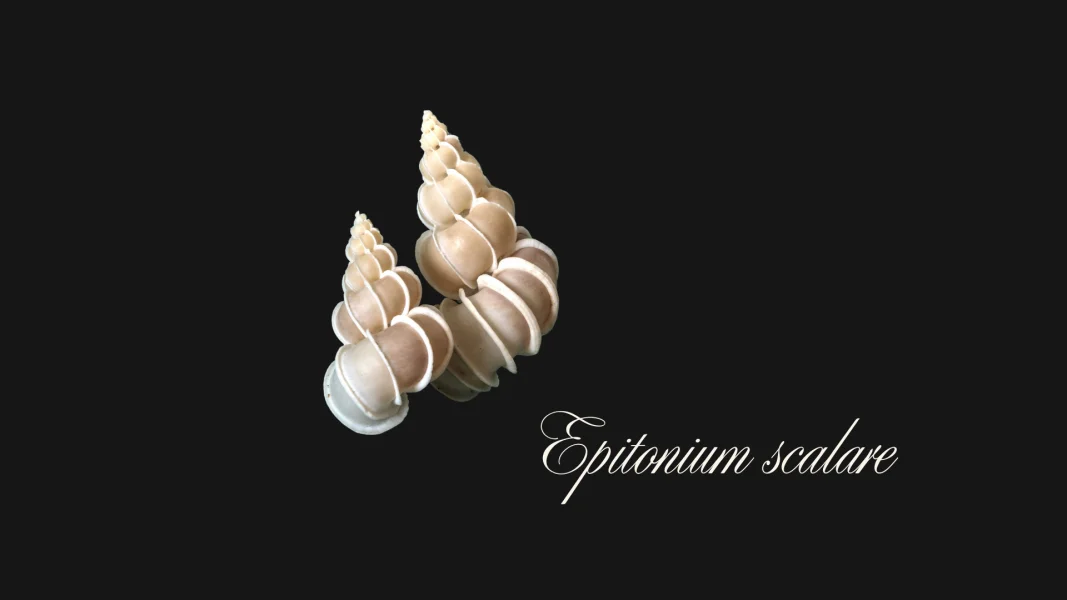
In the annals of shell collecting, few creatures achieved the celebrity of the Precious Wentletrap, Epitonium scalare. This small, milky-white snail shell, seldom more than 6 cm tall, ignited a frenzy in 18th-century Europe, where it was revered as a jewel of the sea. The wentletrap’s shell is a tapering spiral staircase of perfectly spaced whorls connected by delicate vertical ribs – looking as if a master carpenter crafted a miniature “winding stair” (which is exactly what “wentletrap” means in Dutch) out of porcelain. Its beauty and rarity led to extraordinary value. In the 1700s, a Precious Wentletrap could fetch exorbitant sums at auction, sometimes exceeding the price of gold ounce for ounce. European aristocrats vied to own one for their curiosity cabinets; by 1750 it became a status symbol among royals and the ultra-wealthy. This feverish demand in turn gave rise to intrigue: clever Chinese artisans in Canton, seeing the money Europeans would pay, reportedly began crafting fake wentletrap shells out of rice paste to sell to unwitting traders! These counterfeits were so convincing that some made it into collections before experts discovered the deception. Such was the allure of E. scalare that it earned the moniker “Precious”, and that name endures.
42.58185, 18.21506