Geography Cone – The Deadly Poison Dart
Back to all places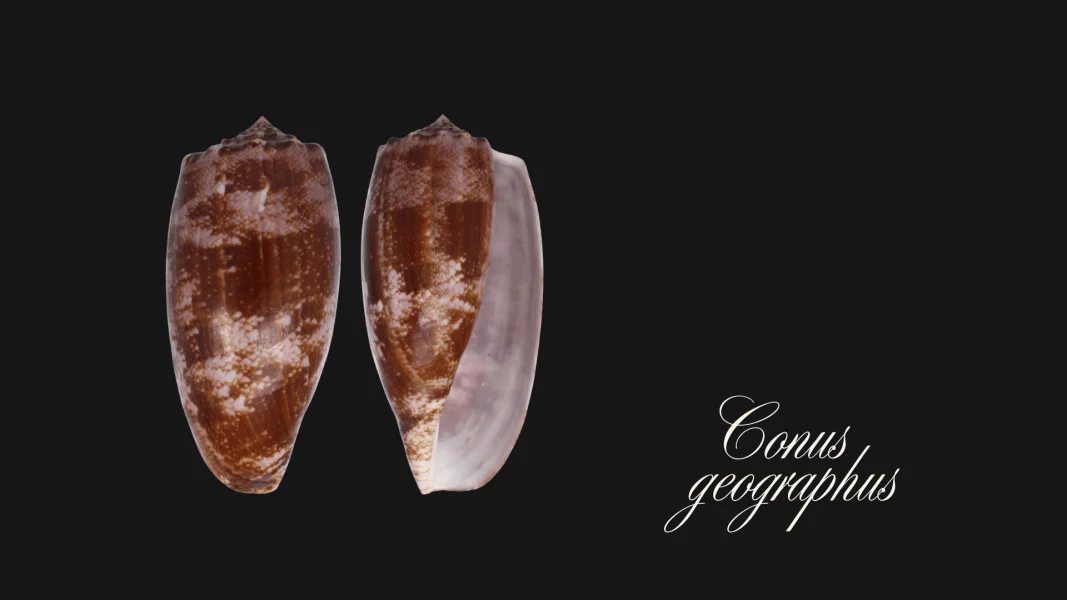
Beneath the tropical waves lurks a beautifully patterned cone snail with a deadly secret. The Geography Cone, named for the map-like markings on its shell, is both beautiful and dangerous. Only 10–15 cm long, this cone snail packs a potent venom that has earned it the nickname “cigarette snail” – implying if it stings you, you’d only have time for one last cigarette. While that is an exaggeration, it hints at the fact that Conus geographus is among the most venomous mollusks on Earth. This snail is a stealthy hunter on Indo-Pacific coral reefs, lying in wait until a small fish comes close. In a lightning strike, it fires a harpoon-like tooth loaded with venom into the fish, paralyzing it within seconds. The snail then reels in the immobilized prey and swallows it whole. Its venom is a complex cocktail of hundreds of toxins, evolved to subdue swift prey almost instantly. Unfortunately, humans are not immune – stings have caused about 30 known human fatalities, making this species the primary culprit among deadly cone snails. There is no antivenom; treatment involves keeping the victim alive on a respirator until the potent neurotoxins wear off.
Despite its fearsome reputation, the Geography Cone has contributed greatly to science and medicine. Its venom contains compounds that target nerve cells with incredible precision. Pharmacologists have isolated cone snail peptides that can block pain signals far more effectively than morphine, but without addictive side effects.
42.58214, 18.21976