Thorny Oyster – Spiny Guardian of the Reef
Back to all places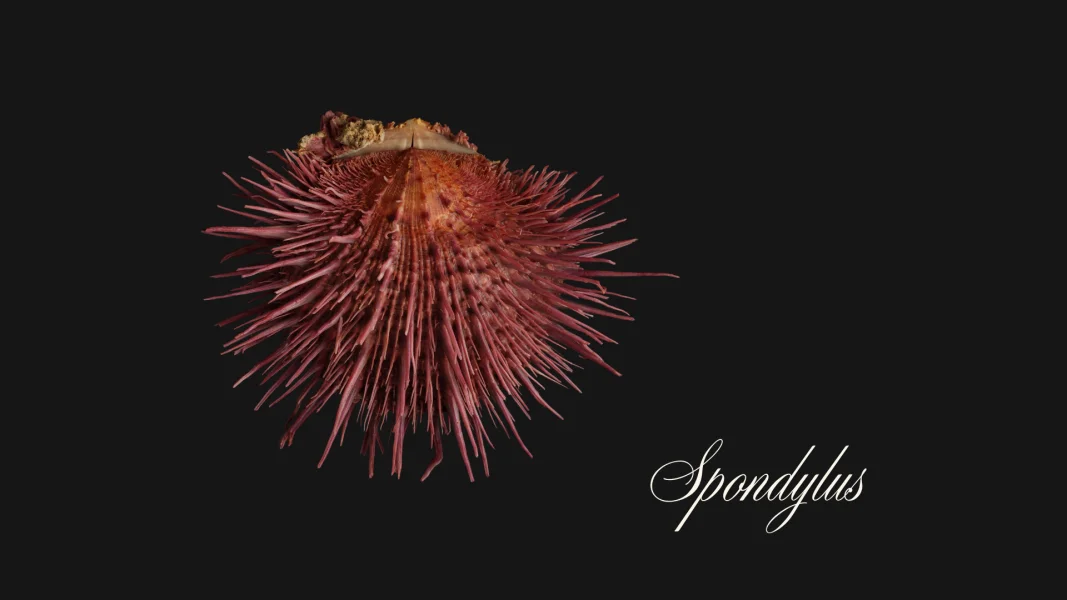
At first glance, a Thorny Oyster (Spondylus) looks like an explosion of spines and color attached to a rock. These bivalves cement themselves to coral or stone, their shells often bright orange, red, or purple and covered in gnarly spikes. They live quietly fixed in place, filtering plankton from the water with fleshy gills.
In doing so, they act as natural water purifiers, much like true oysters – a single Spondylus can filter many liters of seawater each day, removing particles and improving clarity. For this reason, one might call them reef “cleaners.” An abundance of thorny oysters indicates clean, plankton-rich waters, and they contribute to the reef’s health by cycling nutrients and providing microhabitats (small crabs and blennies often hide around their spiky shells).
Beyond their ecological role, Spondylus oysters hold a mythic and cultural significance spanning oceans and millennia. In the Neolithic of Europe (over 7,000 years ago), the Mediterranean species Spondylus gaederopus was so prized for its striking shell that people traded it hundreds of miles inland
To see a thriving thorny oyster on a reef is to glimpse the “roses” of the sea – beautiful but thorny, fragile yet hardy. They remind us that mollusks can be more than food or decoration; they can be cultural treasures and guardians of ecosystems. By protecting Spondylus habitats and regulating harvests, we honor a legacy that spans from Stone Age jewelry-makers to Inca priests. The thorny oyster connects us to our ancestors’ wisdom: that the gifts of the ocean – even a spiky shell – are worth revering and safeguarding for the future
42.58237, 18.21910